

What’s actually in coconut water?
You see it more and more often in gym bags, at the office and in the fridge at home. Makes sense, because anyone wondering what’s actually in coconut water usually wants to know not just whether it tastes good, but mainly whether it really adds something. The short answer: pure coconut water naturally contains electrolytes, a small amount of natural sugars, minerals and, above all, a lot of water. But the precise story is more interesting — and that’s exactly where the difference lies between a fresh hype and a smart choice.
What’s in coconut water?
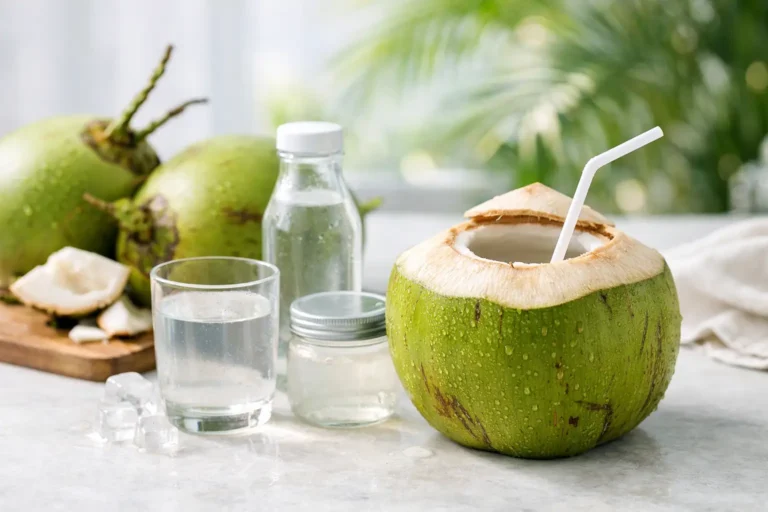
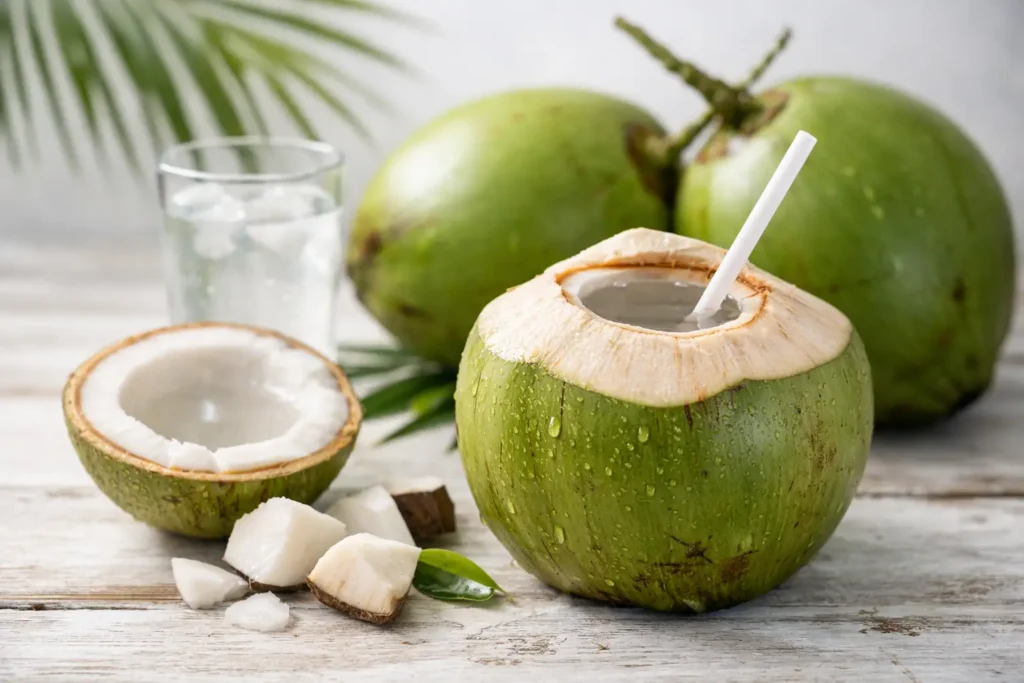
Coconut water is the clear liquid from young, green coconuts. So it’s not the same as coconut milk. Coconut milk is made from the flesh and contains far more fat. Coconut water, on the other hand, is light, refreshing and naturally low in fat.
What’s in coconut water depends on the ripeness of the coconut, the country of origin and the processing after harvest. Still, pure coconut water almost always shows the same basics: water, potassium, sodium, magnesium, calcium and natural carbohydrates in small amounts. That makes it popular with people looking for a cleaner alternative to soda or brightly coloured sports drinks.
The most important thing to remember: pure coconut water isn’t a miracle cure, but it is a natural drink with a functional profile. That’s exactly why it fits well with an active, conscious lifestyle.
The key nutrients in coconut water
The reason coconut water is often chosen after exercise or on hot days lies mainly in the electrolytes. Those are minerals that help with your body’s fluid balance. Potassium especially stands out. Coconut water is known for its relatively high potassium content, which plays a role in the normal function of muscles and nerves.
Coconut water also usually contains sodium. That level is often lower than in classic sports drinks, but it’s still relevant for hydration. Magnesium and calcium are usually present in smaller amounts. Together these minerals make coconut water more than just water with a flavour.
It also contains natural sugars. That’s an important point for many people. Pure coconut water is unsweetened, but not sugar-free. The sugars come naturally from the coconut itself. Usually it’s a modest amount, especially compared to soda or fruit juices. That’s why coconut water tastes lightly sweet, without needing anything added.
Coconut water is also generally low in calories and contains virtually no fat. Protein is present only in very small amounts. So don’t expect a complete food or meal replacement. See it mainly as pure hydration with a natural little extra.
Electrolytes: why they’re so relevant
Electrolytes are popular, but often stay a buzzword. In practice they’re simple: you lose them when you sweat, and your body uses them to distribute fluid properly. That’s why many athletes and active people choose drinks that do more than just quench thirst.
Potassium is the star player in coconut water here. It supports fluid balance and muscle function. Sodium helps too, though the amount in coconut water is usually lower than in sports drinks specifically developed for heavy or long exertion. That immediately brings a nuance: for a light workout, a hot day or recovery after mild exertion, coconut water can be a great choice. For a marathon or intense endurance sport, a drink with extra sodium may sometimes fit better.
Natural sugars without additives
The natural sugars in coconut water provide a bit of energy and make the taste accessible. That’s pleasant if you don’t feel like sticky, heavy drinks. At the same time, it’s good to stay realistic. Natural doesn’t automatically mean you should drink unlimited amounts of it.
Anyone watching their sugar intake does well to compare labels. There’s a big difference between pure coconut water and variants with added juice, flavourings or extra sugar. With a pure product, the ingredient list should be short. Ideally it just says coconut water.
Is coconut water healthier than regular sports drink?
That depends on the moment. For many everyday situations, coconut water feels fresher, lighter and purer than standard sports drink. It naturally contains electrolytes and usually has less sugar than many commercial sports drinks. That makes it appealing if you want to hydrate consciously without unnecessary additives.
But with very intense exertion, it’s more nuanced. Some sports drinks are specifically designed to quickly replenish carbohydrates and sodium. Coconut water does that in a more natural and lighter way, but not always in the same ratio. Someone training intensely for an hour in the heat may have different needs than someone taking a walk, sitting at the office, or doing a yoga class.
So yes, coconut water can be a strong alternative — especially if you choose pure and unsweetened. It’s just not a one-to-one replacement for every sports drink in every situation.
What to look out for if you want to know what’s in coconut water
Not every carton or bottle is equally pure. That’s exactly where many people go wrong. The front often carries words like natural, fresh or pure, but the real information is on the label.
First look at the ingredient list. The shorter, the better. If added sugars, concentrate, flavourings or preservatives are listed, you’re no longer drinking the pure product coconut water is known for. The sugar content per 100 ml also gives a useful indication. Natural variation is normal, but extreme outliers often point to additives.
Origin matters too. Coconut water from tropical regions where coconuts grow under good conditions often has a fresh, soft taste. Processing is just as important. The less that’s changed about the product, the closer it stays to the natural source.
A brand like Freshcoco consciously focuses on that with 100% pure coconut water without additives. That fits people who don’t want a complicated story, just a clean choice for every day.
What’s in pure coconut water, and what isn’t?
Pure coconut water naturally contains fluid, electrolytes and a light amount of natural sugars. What shouldn’t be in it are added sugars, artificial colourings, preservatives or inflated claims that promise more than the contents deliver.
That distinction matters, because coconut water is often bought with a health goal in mind. Then you don’t want a drink that looks healthy but is mostly marketing. Pure really means something in this case.
Also good to know: coconut water is normally lactose-free and naturally vegan. For many people that’s a plus. Especially if you want to avoid dairy or follow a plant-based lifestyle, that’s a nice bonus.
When does coconut water fit best into your day?
Coconut water is especially strong at moments when you need light, natural hydration. It’s popular after exercise, because it refreshes and replenishes electrolytes without sitting heavy. At work it’s a pleasant alternative to soda or another coffee. And at home from the fridge, it’s simply a fresh thirst-quencher that fits better with a conscious routine.
For families it can be interesting too, though portion size remains important. For athletes, timing is relevant. After a short training session or as a refreshment in between, it usually works excellently. For prolonged elite performance, extra replenishment may be needed.
That may well be the strength of coconut water: it fits many moments, without becoming complicated. Not as a jack-of-all-trades, but as a pure drink that knows exactly what it’s good at.
The real value lies in simplicity
Anyone asking what’s in coconut water is often looking for a reason to choose it or not. The honest answer is simple. Pure coconut water mainly contains water, electrolytes and natural sugars in a light, fresh balance. No unnecessary additives, no heavy composition, no artificial character.
And that’s exactly what makes it interesting. In a market full of drinks that shout louder than they deliver, coconut water feels refreshingly down-to-earth. Choose a pure variant, and you choose hydration as it’s meant to be: clean, natural and easy to fit into an active day.
In the end, the best test remains very practical. Read the label, taste the difference, and choose what feels right for your rhythm, your training and your way of living.