

Is coconut water halal? What you need to know

You grab a carton of coconut water after exercise, during a warm workday, or simply because you want something pure to drink. Then the logical question comes up: is coconut water halal? The short answer is usually yes, but only if you look closely at what’s actually in it and how the product is processed. With a natural product the answer seems simple, yet the details are often in the label.
Is coconut water halal at its core?
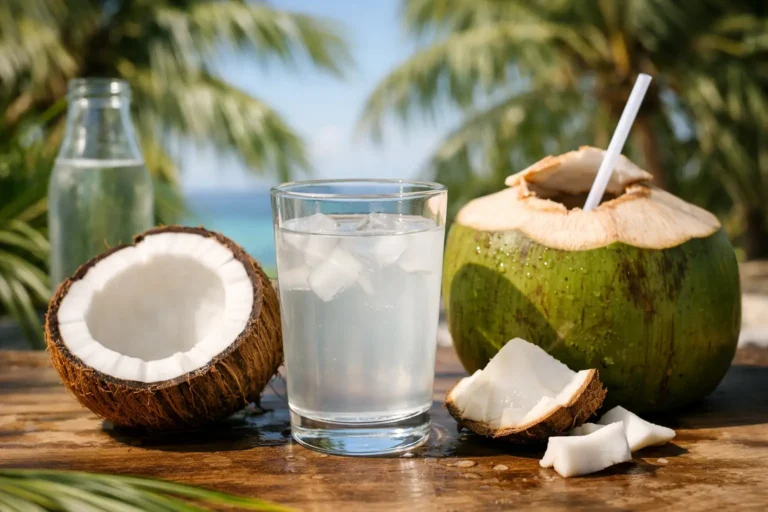
Yes, pure coconut water is fundamentally halal. The liquid naturally comes from a young coconut, so it’s not an animal product, not an alcoholic drink, and not an ingredient that’s problematic in itself within a halal diet. Anyone choosing 100% natural coconut water without additives is generally in the clear.
That doesn’t automatically mean every carton or bottle of coconut water on the shelf has been assessed as halal. The base is pure, but the final drink in the shop may contain extra ingredients or come into contact with substances during processing that critical consumers prefer to keep an eye on. Especially if you eat and drink consciously, that distinction matters.
When is coconut water not automatically halal?
The word coconut water sounds pure, but not every product is composed equally cleanly. Some brands add sugar, flavourings, vitamins, stabilisers or flavour agents. On paper that seems harmless, but that’s exactly where the nuance begins.
Flavourings, for example, can contain a carrier. Vitamin blends or fortifications can come from various sources. And in composed drinks containing coconut water, think smoothies or tropical mixes, other ingredients can also come into play that make the halal status less straightforward. Then it’s no longer pure coconut water, but a processed product.
Fermentation is also a point to watch. Fresh coconut water can, if not properly processed or stored, start to ferment. That can produce small amounts of alcohol. With well-packaged, good-quality commercial coconut water, that’s normally prevented through fast processing and controlled packaging. Still, this shows why the question “is coconut water halal” isn’t only about the coconut itself, but also about what happens to it afterwards.
What to check on the label
Anyone wanting certainty doesn’t need to overcomplicate it. First look at the ingredient list. If it just says coconut water, that’s the strongest signal of a pure product. If you also see sugar, natural flavourings, concentrates or vaguely described additives, it’s worth looking more critically.
Also watch for claims like “from concentrate” or “with added flavour”. That doesn’t automatically make a product haram, but it does increase the chance that extra processing steps or auxiliary substances were used that you might have questions about. For many consumers, the strength of coconut water is precisely that it’s naturally already fresh, lightly sweet and hydrating. The less it’s been tinkered with, the clearer the story.
A halal certificate can offer extra confidence, but its absence doesn’t automatically mean a product isn’t halal. Many pure plant-based products are halal without an official mark. For consumers seeking maximum certainty, such certification remains a strong indicator, of course.
Pure coconut water versus coconut drink
This is often where things go wrong. Pure coconut water is different from coconut drink. Coconut water comes from the young green coconut. Coconut drink is usually a composed beverage, sometimes based on coconut milk, water, sugars, emulsifiers and flavourings. That’s a completely different product, both in nutritional value and in assessment.
If you’re looking for pure hydration and a clear halal choice, 100% coconut water is generally the safest route. You get exactly what you expect: natural refreshment from the coconut, without unnecessary filler. That fits better with a conscious lifestyle and avoids doubt afterwards.
Is coconut water halal if it’s pasteurised?
Yes, pasteurisation itself doesn’t make coconut water haram. Pasteurising is a technique to make the product safe and longer-lasting by briefly heating it. That’s especially relevant for a delicate natural product like coconut water, which would otherwise spoil quickly.
For halal assessment, the composition is what matters, not the fact that the product is pasteurised. In fact, good processing helps prevent unwanted fermentation. That makes the product more stable and reliable. For anyone who wants to drink purely and practically, without cracking open a fresh coconut every day, that’s simply a logical solution.
What about alcohol in coconut water?
This question comes up more often than you might think. Fresh coconut water naturally contains no alcohol. But as with many natural products containing sugars, fermentation can occur if the product sits too long or is stored improperly. In that process, small amounts of alcohol can form.
With properly packaged coconut water processed quickly after harvest, that’s normally not an issue. The risk lies more with an opened package left in the fridge too long, or a product already showing signs of spoilage. If it smells sour, fizzy or fermented, it’s wise not to drink it anymore. That’s not just a matter of halal, but also of quality.
For athletes and conscious drinkers, purity matters extra
People who choose coconut water rarely do so by accident. You choose it because you want a fresh alternative to soda, because you want something light after exercise, or because you want to hydrate more naturally during the day. Then you also want to know what you’re drinking.
That’s exactly why the question “is coconut water halal” is broader than religious compliance alone. It also touches on transparency, simplicity and trust. A clean label, no added sugars, no unclear auxiliary substances — that aligns with how many conscious consumers want to choose today. Halal and pure often go hand in hand here.
How to make a smart choice in practice
At the supermarket or online, you don’t need to be a food technologist. A few practical checks are enough. Preferably choose coconut water with one ingredient: coconut water. Avoid products that resemble a soda or fruit mix more. And pay attention to the brand’s reputation: does it communicate clearly about origin, processing and composition, or does it stay vague?
Origin doesn’t tell you everything about halal status, but it does say something about quality. Coconut water packaged quickly after harvest retains its natural character better. You often taste that too. The difference between a pure product and a polished variant with additives is bigger than many people think.
For anyone who wants to combine certainty with taste and convenience, 100% natural coconut water without added sugars or preservatives is the most logical choice. That’s exactly what brands like Freshcoco focus strongly on: pure, unsweetened and meant for daily refreshment without noise.
Common doubt: is coconut water halal without a certification mark?
Yes, that’s certainly possible. A halal certification mark is useful, but not always necessary to consider a product halal. With simple, plant-based products the assessment is often fairly clear. Think of water, fruit, and thus also pure coconut water. It only becomes more complex once additives, flavourings or composed recipes come into play.
For one consumer, the ingredient list is enough. For another, only a certificate provides complete peace of mind. Both approaches are understandable. As a brand, it pays to be transparent about that, and as a consumer, it pays to look just a bit closer than the front of the packaging.
The bottom line: natural is often safest
If you keep it simple, the answer becomes simple too. Pure coconut water is fundamentally halal. Most doubt doesn’t arise from the coconut itself, but from what manufacturers add to it or how a product is processed. The shorter and clearer the label, the greater the chance you’re simply fine.
Anyone consciously choosing pure hydration isn’t just choosing taste and refreshment, but also peace of mind about what they drink. And that’s exactly what makes a natural product so strong: less noise, more trust, and a choice that fits how you want to feel every day.