

Is coconut water vegan and gluten-free?

You’re standing in the supermarket, pick up a carton of coconut water and wonder: is coconut water vegan and gluten-free? The short answer is usually yes — but not every product is automatically just as pure. That’s exactly where the difference lies between fresh, natural hydration and a drink with unnecessary additives.
For many people, coconut water is a logical alternative to soda, sports drinks or sweetened juices. It feels light, refreshing and natural. But if you eat consciously, live vegan or avoid gluten, you want more than just attractive packaging. You want to know what’s really inside.
Is coconut water vegan and gluten-free at its core?
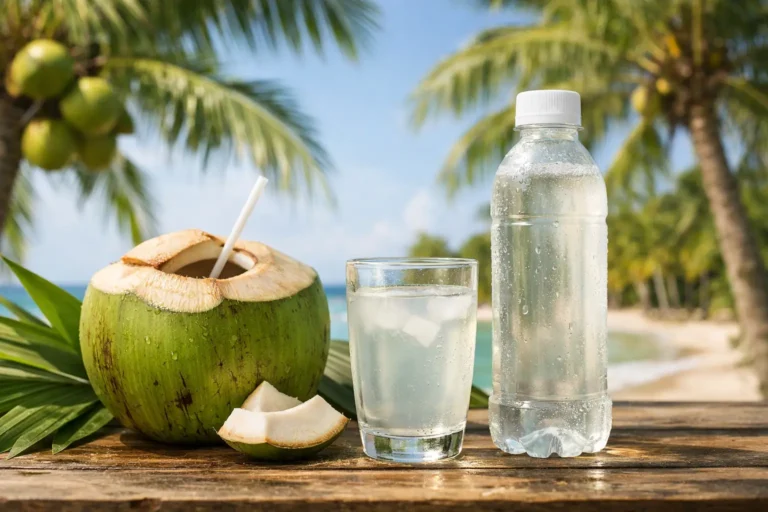
Yes, pure coconut water is naturally vegan and gluten-free. The liquid comes straight from young green coconuts and is therefore a plant-based product. No animal ingredients are involved, and coconut itself contains no gluten either.
That makes pure coconut water appealing for people who consciously choose a plant-based diet or gluten-free eating. Especially if you’re looking for a clean thirst-quencher without milk, soy or artificial additives, pure coconut water is usually a safe bet.
Still, there’s a nuance. The base of coconut water is simple, but the end product in a bottle or carton isn’t always just coconut water. Some brands add sugar, flavourings, fruit juice concentrate or stabilisers. The product often remains vegan and gluten-free, but it becomes less pure. And that purity is often exactly why people choose coconut water in the first place.
Where things can go wrong on the label
Anyone shopping quickly often only looks at the front. That’s where words like natural, light or refreshing appear. The real information is usually on the back. If you want to know whether coconut water is vegan and gluten-free, the ingredient list and allergen information are what matter.
With a truly pure product, you’ll ideally see something like: 100% coconut water. It doesn’t need to be more than that. As soon as the list gets longer, it’s smart to slow down. Added sugars change the nutritional profile. Flavourings can steer the taste. And although many of these additives are technically vegan and gluten-free, they do make the product less clean.
Claims on the packaging can also differ. One brand clearly states vegan and gluten-free on the label, another doesn’t. That doesn’t automatically mean the product is unsuitable, but it does mean you need to check for yourself. People with coeliac disease or a strong gluten intolerance especially tend to prefer maximum clarity.
Watch out for blends and flavoured variants
Plain coconut water is usually the safest choice if purity matters to you. With tropical blends, smoothies or coconut drinks with added flavours, it gets more complicated. Think of combinations with mango, pineapple, coffee or protein. Those variants can still be vegan and gluten-free, but that’s no longer a given.
Especially with protein drinks or creamy variants, ingredients such as dairy components or other additives can appear. Then you’re no longer drinking pure coconut water, but a composed product. That’s not necessarily wrong, just different from what many people are actually looking for.
What vegan really means for coconut water
Vegan sounds simple, but in practice many consumers want certainty about more than just the main ingredient. For coconut water, vegan essentially means no animal ingredients have been added. So no milk, honey, collagen or other animal components.
With pure coconut water, that’s normally not an issue. The drink comes from the coconut and remains fully plant-based. Still, processing can matter to some buyers too — think of processing aids or shared production lines where multiple drinks are made. That’s why an explicit vegan claim adds extra confidence, even when the product is already plant-based in essence.
For athletes and conscious drinkers, that matters. You want to hydrate without compromising on your dietary choices. Coconut water fits well here, precisely because it’s naturally simple and needs no complicated story.
What about gluten-free?
Here too: pure coconut water is naturally gluten-free. Gluten is found in grains such as wheat, barley and rye, not in coconut. Still, many people look beyond the ingredient itself. They want to know if there’s a risk of cross-contamination or hidden additives.
With a single-ingredient product, that risk is usually low, but not zero. Especially if you’re extremely sensitive to gluten, a clear gluten-free label is reassuring. For most consumers, a short ingredient list is confirmation enough. For people with coeliac disease, certification or an explicit claim can be decisive.
That difference matters. Someone who mainly wants to limit gluten looks at things differently than someone who must eat completely gluten-free for medical reasons. So it’s smart to factor in your own sensitivity when choosing.
Why purity makes the real difference
The question is coconut water vegan and gluten-free is often just the starting point. The follow-up question is more interesting: how pure is it, really? Because that’s where the quality you taste and feel lies.
Pure coconut water without added sugars or preservatives fits better with an active, conscious lifestyle. You drink it because you want something lighter than soda, more natural than many sports drinks, and more practical than cracking open fresh coconuts yourself every time. You don’t want to end up with a product that’s mainly cleverly packaged but makes little real difference in substance.
That’s exactly why many people choose coconut water as a daily refreshment, after exercise or on the go. It needs to be easy, but the ingredients need to check out too. Pure in composition, fresh in taste and clear on the label.
Coconut water after exercise or during busy days
Coconut water is popular among athletes and busy professionals because it drinks light and naturally contains electrolytes, such as potassium. That makes it an appealing choice after a workout, on a hot day, or as a fresh pick-me-up at the office.
That functional benefit only really works well if the product stays clean. An oversweetened variant quickly feels like soda in disguise. A pure product suits people who hydrate consciously and aren’t looking for unnecessary baggage.
How to recognise a good choice
If you want to judge at a glance whether a product suits you, start by looking at the ingredients. If it just says coconut water, you’re usually fine. Then look at claims such as unsweetened, no preservatives, vegan or gluten-free. Not every claim is mandatory, but together they give a clearer picture.
Taste can also tell you something. Pure coconut water has a subtle, fresh, naturally slightly sweet taste. If it tastes extremely sweet or very artificially fruity, chances are the recipe has been adjusted.
Packaging plays a role too, though it doesn’t tell the whole story. Premium brands often communicate clearly about origin, purity and composition. That’s no guarantee, but it is a good signal. Coconut water from young coconuts, without extras, remains the strongest choice for conscious drinkers.
Is all coconut water the same? Not quite
No. Two cartons can both be called coconut water and still differ significantly in taste, quality and composition. The origin of the coconuts, harvest timing and processing all play a role. The difference between concentrate and not-from-concentrate can be noticeable too.
For one drinker, that makes little difference. For another, it matters a lot. If you buy coconut water mainly for pure hydration and a natural taste, it pays to choose critically. A premium variant with 100% pure coconut water fits better with what many people are actually looking for.
That’s why a brand like Freshcoco fits this need so well: clear about ingredients, strong on purity, and made for people who want to choose consciously without complicated fuss.
So, is coconut water vegan and gluten-free?
With pure coconut water, the answer is simple: yes. It’s plant-based, naturally gluten-free, and a fresh choice for anyone who wants to drink clean and consciously. The caveat isn’t in the coconut itself, but in what brands may add to it.
Anyone who wants certainty doesn’t need to become a nutrition expert. A short ingredient list, clear claims and an honest taste already get you far. Choose pure, and coconut water does exactly what you expect from it: naturally refreshing, without detours.
The best rule of thumb is very practical: if the label is as clean as the taste, you’re usually good.