

Guide to Halal and Vegan Drinks That Taste Pure
A quick thirst-quencher after exercise, a drink for on the go, or something refreshing at the office: with drinks in particular, you often expect things to be fine by default. Yet flavourings, sweeteners, dairy components and production methods can make all the difference. With this guide to halal and vegan drinks, you can make a conscious choice for pure refreshment that suits your lifestyle.
The basics are simple: don’t just look at the front of the packaging. Words like ‘natural’, ‘plant-based’ or ‘sugar-free’ don’t automatically tell you everything about vegan or halal suitability. Knowing what to look for makes choosing faster — without every shopping trip turning into a complicated treasure hunt.
What makes a drink both halal and vegan?
Vegan means that a drink contains no ingredients of animal origin. Think not only of milk, yoghurt or honey, but also of less visible components such as certain colourings, vitamins or processing aids. An oat cappuccino may be vegan, for example, while a ready-made iced coffee still contains milk powder.
Halal is about more than avoiding pork. With drinks, alcohol and alcohol-based flavourings are often the most important points of attention. The origin and processing of ingredients can also play a role. A drink can be entirely plant-based and therefore vegan, yet still not halal if it contains alcohol or if its halal status is unclear.
That is why ‘vegan’ is not an automatic guarantee of halal, and vice versa. With a product that has a short, clear ingredient list, the choice is usually easier. But if you want absolute certainty, choose packaging with a reliable halal certification or ask the manufacturer about the product’s status.
Guide to halal and vegan drinks: how to read the label
A good label tells you much more than just how many calories a drink contains. Start with the ingredient list. The shorter and more recognisable it is, the easier it is to assess what you are drinking. Water, coconut water, fruit, tea and coffee are clear starting points. With composite drinks, an extra look is needed.
Pay particular attention to words such as milk, whey, casein, lactose, yoghurt, honey and gelatine. These ingredients do not fit within a vegan diet. Even with ‘plant-based’ drinks, it pays to look further: some varieties contain a lot of added sugar, creamy flavourings or a long list of stabilisers.
For halal choices, alcohol, wine extract, liqueur, fermented ingredients and flavourings deserve attention. The word ‘alcohol-free’ can help, but does not always mean that a product is halal certified. Rules and interpretations can vary by certification body and personal conviction. When in doubt, an official halal declaration remains the clearest choice.
E-numbers are not necessarily a problem, but can raise questions when the source is not stated. Some colourings, emulsifiers and flavourings can be derived from various raw materials. A transparent manufacturer that clearly communicates the origin provides more reassurance than a label full of vague terms.
Which drinks are often a logical choice?
The most natural options are usually also the most straightforward. Water, sparkling water without additives, unsweetened tea and black coffee are often vegan and halal by nature. Add syrup, milk, cream or ready-made flavour mixes, and that changes quickly.
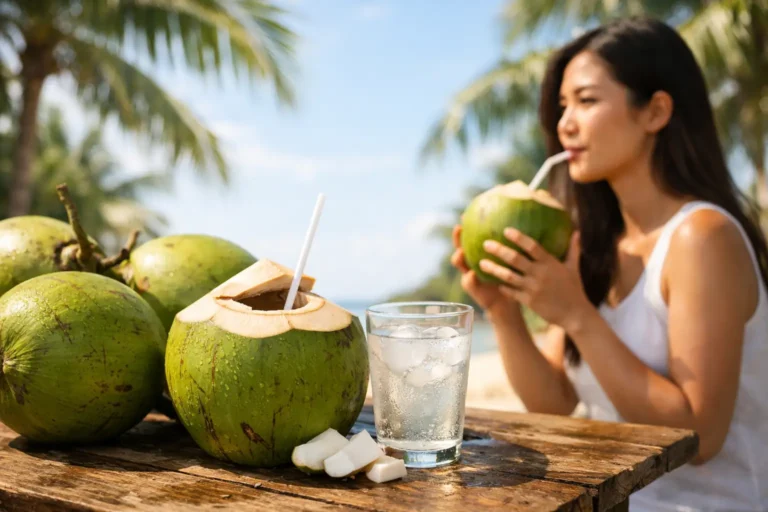
Pure coconut water is a refreshing choice for those who want more than plain water but have no desire for a sugary soft drink. Coconut water naturally contains electrolytes and has a mild, tropical flavour. If the label lists only coconut water, the vegan status is clear. The same practical rule applies to halal status: check the certification or product information if certification matters to you.
100% fruit juice can also be suitable, provided it is genuinely juice without unclear additives. Do bear in mind the natural sugar content. Fruit juice is not a replacement for water throughout the entire day, but can be a pleasant change at breakfast or after an active day.
Plant-based drinks made from oat, soy, almond, coconut or rice are vegan when they contain no dairy components. They differ considerably in taste and nutritional value. An unsweetened soy drink often contains more protein, while a coconut drink is lighter and more tropical in flavour. Choose what suits your moment: creamy for coffee, neutral for breakfast, or fresh as a base for a smoothie.
Drinks that deserve a closer look
Not every healthy-looking product tells the whole story. These categories in particular deserve a second glance at the label:
- Kombucha and other fermented drinks can contain small amounts of alcohol as a result of fermentation. The amount varies by product and batch.
- Energy drinks and sports drinks are sometimes vegan, but regularly contain a lot of sugar, sweeteners, flavourings and colourings. Also consider caffeine if you drink them late in the day.
- Protein shakes often contain whey or milk protein. Vegan varieties usually use pea, soy or rice protein, but check the remaining ingredients.
- Chilled smoothies may contain yoghurt, honey or added sugars. A smoothie made from fruit, vegetables, water or coconut water gives you the most control.
That does not mean you should always avoid these drinks. It depends on your preference, your diet and the occasion. A plant-based protein shake can be a good fit after strength training. A sports drink can be useful during a long, intensive effort. For an ordinary walk, working day or short exercise session, a pure drink is often more than sufficient.
Choose based on your moment
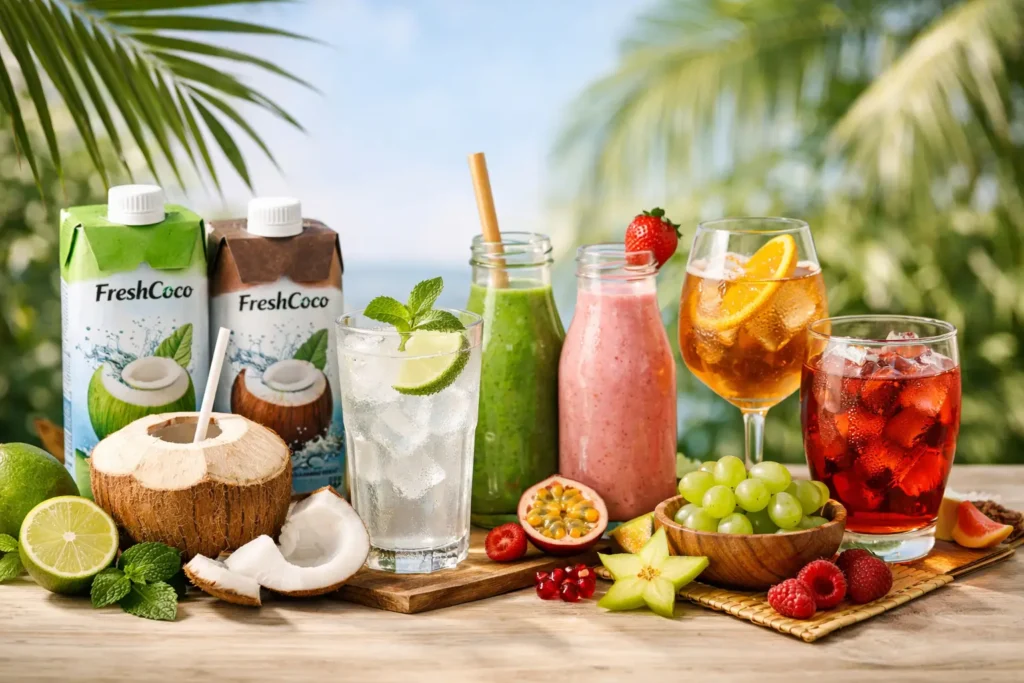
Drinking mindfully does not mean making the same choice every day. Start your morning with water, tea or coffee with a plant-based drink, for example. Take a chilled carton of pure coconut water with you on the go. Its fresh flavour and natural electrolytes make it a pleasant option after exercise or when you want to recharge after a busy appointment.
At home, it is easy to vary. Make a smoothie with banana, berries, spinach and coconut water. Prepare cold mint tea in the fridge. Or combine sparkling water with slices of lime and fresh ginger for a festive alternative to soft drinks. This keeps hydration appealing without relying on sweet flavourings.
For families, simplicity is especially valuable. A stock of drinks with a recognisable ingredient list prevents last-minute choices for sugary soft drinks. The same applies to busy professionals: if a pure option is ready at the office or in your bag, making a healthy choice becomes naturally easier.
Purity over marketing language
Packaging can be full of promises such as ‘natural’, ‘light’ or ‘conscious’. See those words as a starting point, not as proof. The ingredient list, any certifications and the transparency of the manufacturer tell the real story.
Preferably choose a drink that does what it promises. Pure coconut water does not need a long list of additives to be refreshing. Tea does not need sweet syrup to have flavour. And a good plant-based drink does not need to resemble a dessert to be pleasant to drink.
The best choice is ultimately not the most complicated one, but the choice you can repeat with confidence. Fill your fridge with drinks whose ingredients you understand, whose taste you genuinely enjoy and that fit your rhythm. Then mindful hydration stops being a rule and becomes a fresh routine.