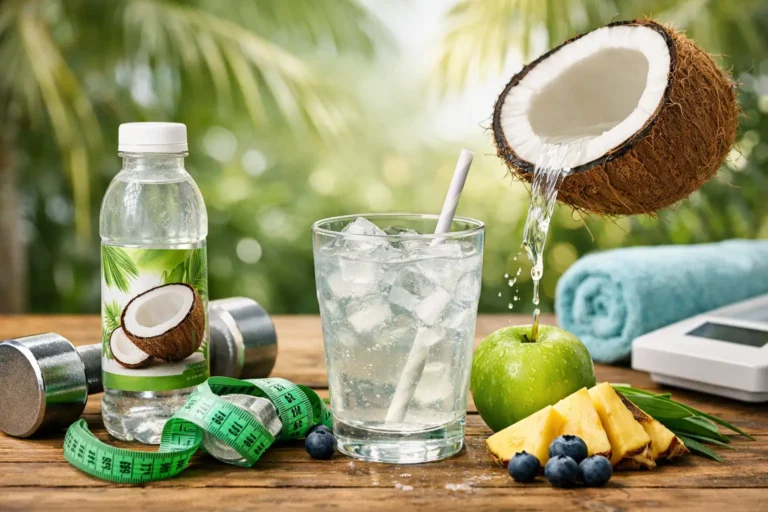


Coconut water versus mineral water compared
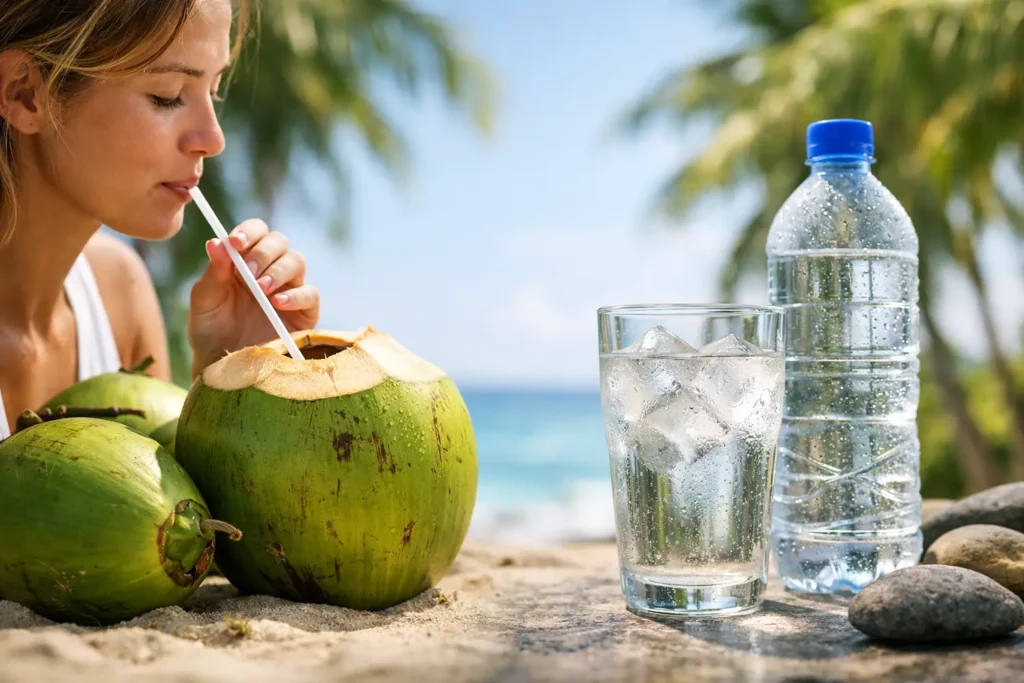
After an intense workout, during a busy workday or on a warm afternoon, there is really only one thing you want: refreshment that feels good. When it comes to coconut water versus mineral water, there is no universal winner. Both drinks hydrate, but they bring something different to your glass. Mineral water is simple and neutral. Pure coconut water adds a gentle tropical flavour and naturally present electrolytes.
The best choice therefore depends on your moment, your preference and what your body needs at that time. Looking for everyday thirst relief without calories? Then mineral water is often exactly right. Want something with more flavour and natural minerals after exercise or on the go? Then coconut water can be a refreshing addition.
Coconut water versus mineral water: what is the difference?
Mineral water is water from a natural source containing minerals that vary by source. Think calcium, magnesium, sodium and bicarbonate. The taste is usually neutral, although the mineral content can make a slight difference. Still or sparkling: at its core it remains water and generally contains no sugar or calories.
Coconut water is the clear liquid from young, green coconuts. It is not coconut milk, nor is it a flavoured sports drink. Pure coconut water has a naturally light-sweet, fresh taste and contains, among other things, potassium. It also contains small amounts of other electrolytes, such as magnesium and sodium. Because it is a natural drink, it also contains naturally occurring sugars and therefore calories.
That distinction matters. Anyone looking purely at calories will more readily choose mineral water. Those who value a mildly sweet taste and electrolytes alongside fluid intake may prefer coconut water instead. It is not about better or worse, but about what fits your routine.
Hydration starts with drinking enough
For most quiet days, plain water is an excellent basis for your fluid intake. Whether that is tap water or mineral water makes little difference for hydration in most cases. Take a bottle to the office, put a jug on the table or drink a glass with every meal. Those small habits often work better than waiting until you are very thirsty.
Coconut water can help make that routine more appealing, especially if you sometimes find water boring. Its light flavour makes it a pleasant alternative to soft drinks, juice or sweet iced tea. In that case, choose 100% pure coconut water with no added sugars, flavourings or preservatives. That way you know you are drinking what the coconut naturally offers.
Electrolytes: when do they make a difference?
Electrolytes are minerals that play a role in fluid balance and normal bodily functions. You lose fluid and salts through sweat, among other things. The more you sweat, the more relevant it becomes to think beyond just water.
After a gentle walk or an ordinary workday, you usually do not need to overthink this. Water and regular meals are often sufficient. After a long, warm training session, an intensive cycling trip or an active day in the sun, a drink containing electrolytes can be particularly welcome. Coconut water naturally contains relatively high levels of potassium, but is generally less rich in sodium than many specially formulated sports drinks.
That last point calls for nuance. During very prolonged or extreme sweating, coconut water alone is not always the most targeted choice for replenishing salt loss. Especially during endurance sports in the heat, sodium can be important. Use coconut water as a natural refreshment alongside water and food, not as a magic solution for every sporting performance.
In cases of illness, dehydration or persistent fluid loss, it is also wise to follow medical advice. An oral rehydration solution has a specific composition and is not the same as coconut water or mineral water.
Taste, sugar and ingredients under the microscope
Mineral water has one major advantage for those who want to drink as neutrally as possible: it contains no natural or added sugars. Sparkling mineral water can also be a festive alternative to soft drinks, without having to opt for something sweet.
Pure coconut water does contain natural sugars. That is no reason to avoid it, but it is a reason to choose consciously. The amount varies by coconut water and serving size. Check the label and pay attention to the difference between natural sugars and added sugar. A product listing only coconut water as an ingredient fits a pure, unsweetened choice.
Taste is also personal. Mineral water refreshes without demanding attention. Coconut water has a soft, lightly nutty sweetness that some people appreciate immediately and others need a little time to get used to. Served well chilled, its fresh, tropical character comes through best.
Why the origin of coconut water matters
Coconut water comes directly from the coconut, but the quality in a package is partly determined by selection, processing and ingredients. A short, clear ingredient list is therefore a good starting point. No unnecessary additives, just the pure taste of the fruit.
Cocoxim coconut water is made from coconuts sourced in Vietnam and is 100% natural, vegan, gluten-free and non-GMO. That makes it an accessible choice for anyone seeking a premium moment of natural hydration, at home or on the go. A 330 ml bottle is convenient for after sport or in your bag. A 1-litre pack fits well in the fridge for the family, a work-from-home day or a relaxed morning.
Which drink suits which moment?
Think of mineral water as your reliable daily foundation. At breakfast, during meetings, with meals and at your desk: it is a simple way to drink regularly. Struggling to get enough fluid? Alternate still water with sparkling water, a few slices of lemon or ice cubes.
Coconut water fits well in moments when you want something extra without reaching for sugary soft drinks. Drink it chilled after a workout, as a pick-me-up after a warm journey home or as a natural alternative during an afternoon slump. The electrolytes present and gentle flavour also make it pleasant after a sweaty yoga class, a walk or an active day with the children.
For athletes, timing matters more than grand promises. During a one-hour training session at normal temperatures, water is often perfectly fine. During longer training, heavy sweating or warm weather, coconut water can be a tasty addition. Above all, test what your stomach finds comfortable and do not wait to drink until you are completely depleted.
Those watching their sugar intake do not need to cut out coconut water entirely. Treat it as a mindful drink choice rather than an unlimited thirst quencher. Fill your day primarily with water and choose coconut water for the moment when flavour, convenience and natural electrolytes genuinely add something.
The smart choice is often to alternate
You do not have to choose between a fridge full of mineral water or coconut water alone. The strength lies precisely in a routine that fits your life. Water for the foundation. Coconut water for flavour, variety and a natural electrolyte moment. That keeps hydration simple, pure and something you look forward to every day.
So put a chilled bottle ready before your next active moment. When your drink is within reach and tastes good, taking care of yourself becomes a great deal more natural.