


Coconut Water vs Isotonic Drink for Your Workout
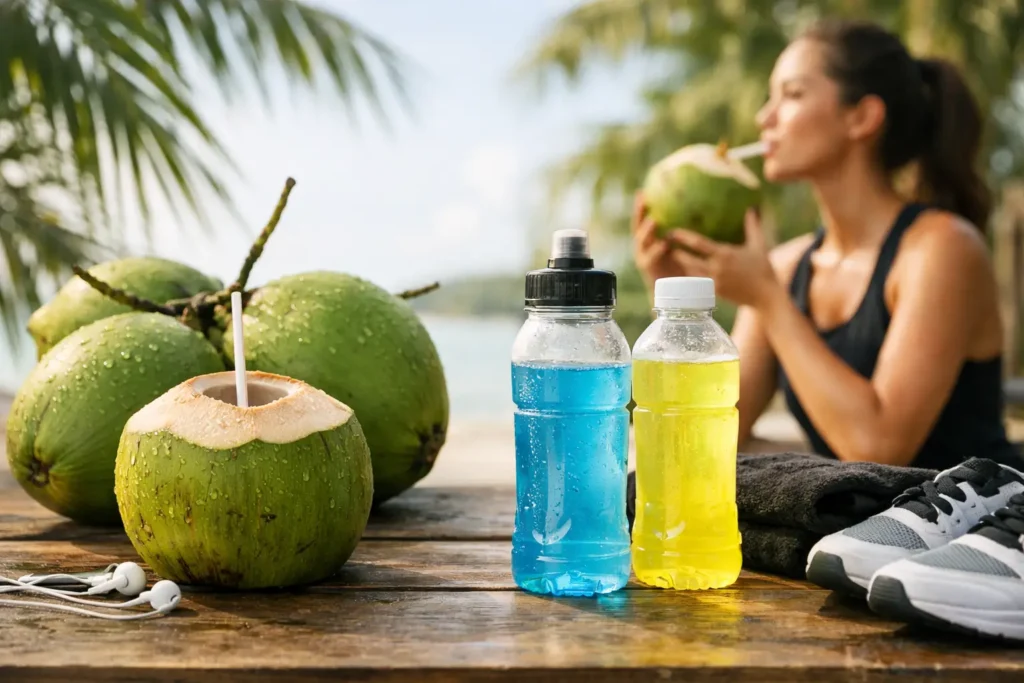
After an intense workout, you want just one thing: to feel refreshed again. Yet the choice in your sports bag is less straightforward than it seems. When it comes to coconut water vs isotonic drink, it is not only about quenching thirst, but also about what your body loses, what you want to replenish and how many unnecessary additives you want to avoid.
Coconut water and isotonic sports drinks can both have a place in an active lifestyle. They are simply made with a different purpose in mind. Coconut water is naturally pure and refreshing. An isotonic drink is usually formulated to quickly deliver fluids, carbohydrates and sodium during prolonged exercise. The best choice therefore depends on your specific moment.
Coconut Water vs Isotonic Drink: the Differences
The biggest difference lies in the ingredients. Pure coconut water comes directly from the young coconut and naturally contains fluid, minerals and a mild, lightly sweet flavour. No list of flavourings is needed to make it taste good. If you choose 100% pure coconut water with no added sugars, you are drinking exactly that: coconut water.
An isotonic drink is more functionally formulated. These drinks typically contain water, carbohydrates such as sugar or maltodextrin, electrolytes and often flavourings or acidity regulators. The ratio of fluid, sugar and salts is designed to be absorbed quickly during exercise.
That does not automatically make an isotonic drink inferior. It simply means the drink has a different purpose. Someone who cycles for an hour and a half, runs in warm weather or sweats heavily has different needs than someone who wants to rehydrate after a yoga class, a walk or a strength training session.
| | Pure coconut water | Isotonic drink | |—|—|—| | Base | Natural coconut water | Formulated sports drink | | Flavour | Soft, tropical and mildly sweet | Often sweet and fruity | | Sugar | Naturally occurring sugars | Often added sugars or carbohydrates | | Electrolytes | Mainly potassium, with small amounts of other minerals | Often extra sodium and sometimes potassium | | Best moment | Daily refreshment and recovery after light to moderate exercise | Prolonged, intensive exercise with heavy sweating |
Electrolytes: Not All the Same
Electrolytes are minerals that help maintain fluid balance and support the normal functioning of muscles and nerves. Potassium, sodium, magnesium and calcium are well-known examples. You lose electrolytes through sweat, but the amount varies greatly depending on the individual, the sport, the temperature and the duration of your exercise.
Coconut water is known for its natural potassium content. That is appealing when you are looking for a pure drink after exercise or as a refreshment during a busy working day. Its fresh character also makes it a pleasant alternative to soft drinks, especially if you have no need for artificial flavours or a cloyingly sweet aftertaste.
Sodium deserves an honest mention here. Sweat causes you to lose mainly sodium, and coconut water naturally contains less of it than most isotonic drinks. Have you just completed a long endurance training session, are you exercising in the heat or do you know that you sweat heavily? Then a drink with more sodium may be more practical. You can also combine water and coconut water with a meal or snack that contains salt.
How Much Sugar Do You Actually Need?
The word sugar quickly raises questions. In coconut water, it refers to naturally occurring sugars from the coconut. In isotonic drinks, carbohydrates are often deliberately added because your body can use them as fuel during long, strenuous exercise.
During a light training session of 30 to 60 minutes, you generally do not need a sugar-containing sports drink. Water is often sufficient, and coconut water can be a flavourful, natural option when you want something more than plain water afterwards. If you drink isotonic sports drinks after every short session while expending little energy, you will quickly consume more sugar than you need.
During intensive endurance exercise, the situation is different. Think of a long cycling ride, a half marathon, a demanding team sports match or a training session in high temperatures. In those cases, carbohydrates in your drink can help keep energy available. It is not a matter of right or wrong, but of choosing the right drink for the exercise you are doing.
When Should You Choose Coconut Water?
Coconut water is particularly well suited to moments when purity, flavour and everyday hydration are the priority. Take a chilled bottle to the office, drink it after a walk or choose it after strength training when you want a fresh, light thirst-quencher. The tropical flavour feels like a small moment of calm, without immediately reaching for a soft drink or a brightly coloured sports drink.
For those who want to make more conscious choices, the label is often a decisive factor. 100% natural coconut water with no added sugars and no preservatives fits a routine that can be simple: grab, drink, refresh. Cocoxim coconut water is a pure choice for at home, on the go or straight after your workout.
Do pay attention to the size that suits your day. A 330 ml bottle is convenient in your sports bag or when you are out and about. A 1-litre pack is handy at home, for sharing or for keeping chilled after an active day.
When Is an Isotonic Drink the Smarter Choice?
An isotonic drink comes into its own when you are truly performing hard for a long time. During exercise lasting longer than approximately 60 to 90 minutes, especially in the heat, the combination of carbohydrates and sodium can help replenish fluid and energy. This applies, for example, to dedicated runners, cyclists and athletes who play multiple matches in a single day.
In that case, look critically at the label. How much sugar does the drink contain? How much sodium? And are you drinking it because you need it, or mainly out of habit? A drink with a sporty package is not necessarily tailored to your training.
For children and for relaxed recreational sporting moments, an isotonic drink is often not necessary. Water remains the foundation. If you want something flavourful and natural afterwards, pure coconut water is an accessible addition.
Hydration Starts Before You Feel Thirsty
Waiting until you are extremely thirsty is rarely a good strategy. Especially on warm days or busy working days, it helps to drink at regular intervals throughout the day. If you start your training already well hydrated, you will need to catch up much less afterwards.
Also pay attention to your body’s signals. Dark yellow urine, headaches, a dry mouth or unusually tired muscles can indicate that you need more fluid. But do not make hydration more complicated than necessary. Drink water regularly, eat a varied diet and choose a drink that suits your activity and that you actually feel like having.
A practical routine often works best. Water as your daily foundation, coconut water as a pure refreshment around light to moderate exercise, and an isotonic drink on occasions when you are sweating and expending energy for an extended period. This gives each drink a clear role.
The Choice That Suits Your Day
Those who are primarily looking for a natural thirst-quencher with a soft tropical flavour will be well served by pure coconut water. Those who exercise intensively for hours and sweat heavily may benefit from the extra carbohydrates and sodium of an isotonic drink. So let your choice be guided not by the boldest packaging, but by your level of exertion, the ingredients and how you want to feel afterwards.
Put a cold pack of coconut water ready for after your next training session or busy day. Sometimes the most refreshing choice is simply the purest one.


