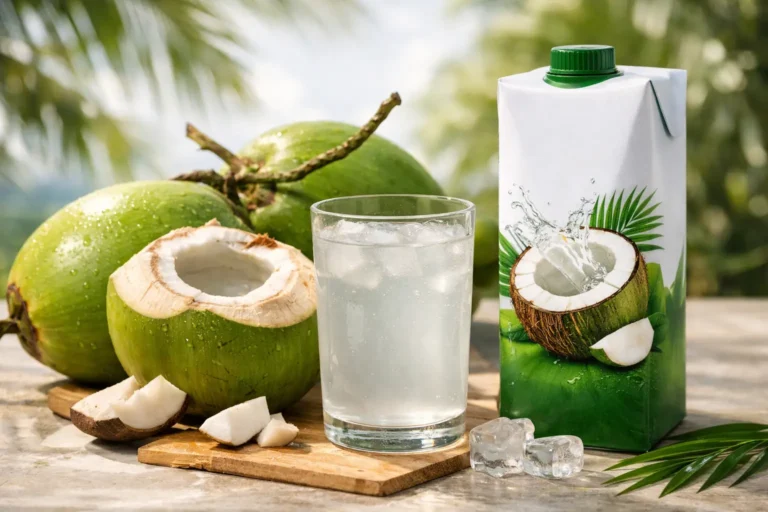


Coconut Water or Juice from Concentrate: Which Should You Choose?
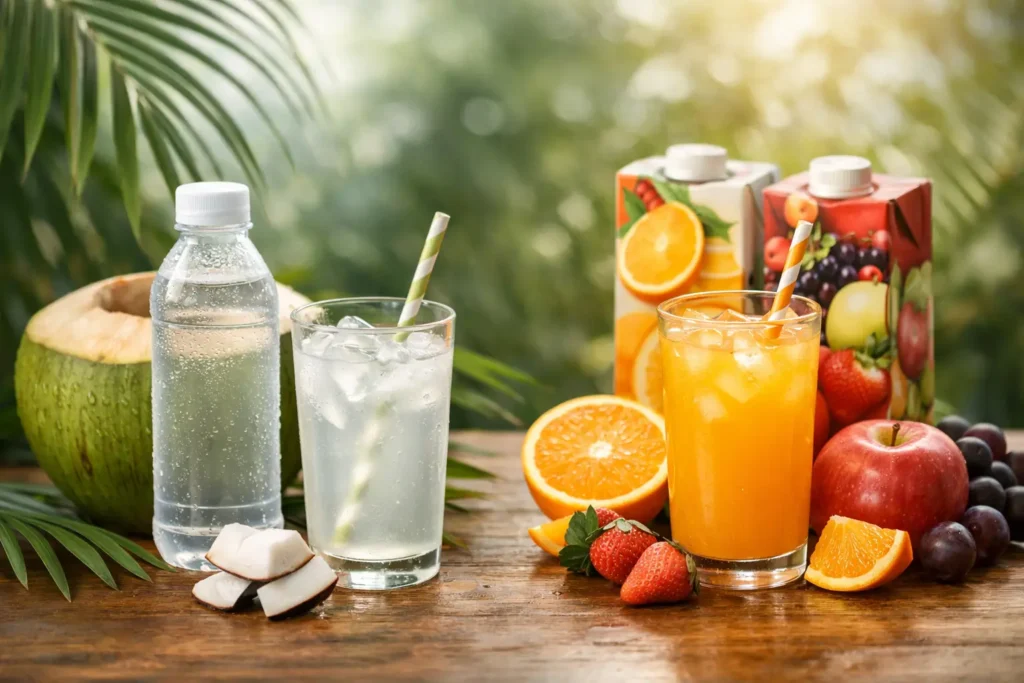
A carton looks fresh, the taste is sweet and the label says ‘natural’. Yet there is a fundamental difference between coconut water and juice from concentrate. Especially if you consciously choose pure hydration after exercise, during a busy workday or as a healthier alternative to soft drinks, you want to know what you are drinking.
Coconut water comes naturally from young, green coconuts. Juice from concentrate is first reduced and later diluted again with water. That is not necessarily a bad choice, but it does say something about the journey a drink has taken. Anyone looking for the purest possible product therefore looks beyond the front of the packaging.
What is 100% pure coconut water?
Pure coconut water is the clear liquid found inside young coconuts. It is not coconut milk and it is not a drink with a coconut flavour. The soft, lightly sweet taste occurs naturally, without the need for sugar, syrup or added flavourings.
Coconut water naturally contains electrolytes, including potassium. That makes it a refreshing choice when you have been sweating, are on the go a lot or simply want something other than plain water. It remains a drink with natural sugars and calories. Do not treat it as a replacement for all your daily water, but as a pure, enjoyable addition at moments when you want more flavour and natural minerals.
The shortest ingredient list is often the clearest: coconut water. No added sugar, no preservatives and no ingredients you need to look up first. Good packaging and careful processing help to keep the product shelf-stable, without making the basics unnecessarily complicated.
What does juice from concentrate mean?
With juice from concentrate, the original juice is processed by removing part of the water. This leaves a concentrated base that takes up less volume during transport and storage. Water is later added back so that the drink returns to a drinkable strength.
This process is used for many fruit juices. It can be practical and efficient, but it is not the same as a product packed directly from the fruit. Heating and processing can alter subtle flavour nuances. That is why producers sometimes add flavourings to restore a recognisable, fuller taste.
With coconut water the question is especially relevant, precisely because people often choose it for its pure, natural image. If the label says ‘from concentrate’, you are still drinking a product based on coconut water. But if you choose 100% coconut water that is not made from concentrate, you are choosing a less processed route from coconut to packaging.
Coconut water or juice from concentrate: the differences
The biggest difference lies not only in the taste, but above all in the processing. Pure coconut water is collected after harvesting and carefully packaged. With concentrate there is an extra step: reducing and then diluting again. That step is not directly visible in your glass, but it can influence the experience of the product.
Taste: fresh, soft and natural
Real coconut water does not taste exactly the same everywhere. The taste can vary slightly depending on the harvest, origin and ripeness of the coconut. That is precisely a sign of a natural product. One sip is a little fresher, another a little rounder or subtly sweeter.
Juice from concentrate can taste very consistent. For some people that is pleasant. Those who prefer a soft, natural and not overly sweet taste often appreciate the inherent flavour of pure coconut water. Do not expect a tropical soft drink: coconut water is refined, thirst-quenching and mild.
Ingredients: look beyond the claim
‘Natural’ on the packaging does not tell the whole story. Turn the carton or bottle around and read the ingredient list. For a pure product you ideally want to see one main ingredient: 100% coconut water.
Also watch out for terms such as added sugar, flavouring, sweetener and juice from concentrate. A short list gives quick clarity. That is especially useful when you buy coconut water for your family, drink it after a workout or are consciously trying to cut back on sugary drinks.
Origin and processing: why the difference matters
Coconuts do not grow in the Netherlands. The journey from the palm tree to your refrigerator therefore always requires a reliable supply chain, safe packaging and trustworthy processing. The origin says something about where the coconuts are grown, while the production method tells you what happens to the coconut water afterwards.
Vietnam, for example, is a country with a strong coconut culture and a tropical climate in which young coconuts thrive. Premium coconut water is all about that combination: carefully selected young coconuts, a pure composition and a process that respects the fresh taste. You notice this most when you drink it chilled.
When is pure coconut water a smart choice?
After exercise, coconut water is a fresh option when you want to replenish fluids and electrolytes without immediately reaching for a brightly coloured sports drink with added sugars. After heavy, prolonged exertion, a sports drink containing sodium and carbohydrates can sometimes be more functional, depending on your effort and how much you have sweated. For a regular workout, walk or yoga session, pure coconut water fits perfectly into a mindful routine.
At the office it is a great alternative to a second soft drink of the day. A chilled 330 ml bottle is easy to take along and provides a naturally refreshing moment between appointments. At home, a 1-litre pack works well at breakfast, as a base for a smoothie or to share with others.
It can also be an appealing choice for health-conscious families. Not because every drink with a tropical origin is automatically healthy, but because an unsweetened variety without unnecessary additives stays clear and simple. Serve it cold, optionally with ice and a slice of lime, and let the natural taste speak for itself.
How to recognise a pure choice on the shelf
Do you want to avoid any doubt between clever marketing and genuine purity? Then look at the back of the packaging. A good choice starts with a clear product name and an ingredient list you can understand immediately. Check whether the product contains 100% coconut water, whether no sugar has been added and whether it contains no preservatives or flavourings.
Also pay attention to serving size. A small bottle is ideal for on the go or after your workout. A larger pack suits home use better and helps you build a consistent hydration routine. Anyone who drinks coconut water regularly can also avoid reaching for a less mindful thirst-quencher on busy days by keeping a stock or bundle at hand.
Cocoxim coconut water is an example of a pure choice: 100% natural coconut water from Vietnam, with no added sugars and no preservatives. Vegan, gluten-free and non-GMO — exactly what you want when simplicity on your ingredient list is just as important as taste in your glass.
The best choice is the one you keep drinking
Coconut water and juice from concentrate are not the same, even if the packaging sometimes looks very similar. If you want a drink with the shortest possible journey from coconut to your moment of refreshment, choose 100% pure coconut water that is not made from concentrate.
Make it easy for yourself: keep a few chilled bottles ready for after exercise, take one to work or pour a glass at home instead of a soft drink. Pure hydration does not have to be complicated. Sometimes a better choice simply starts with turning a package around.