


How to properly store opened coconut water
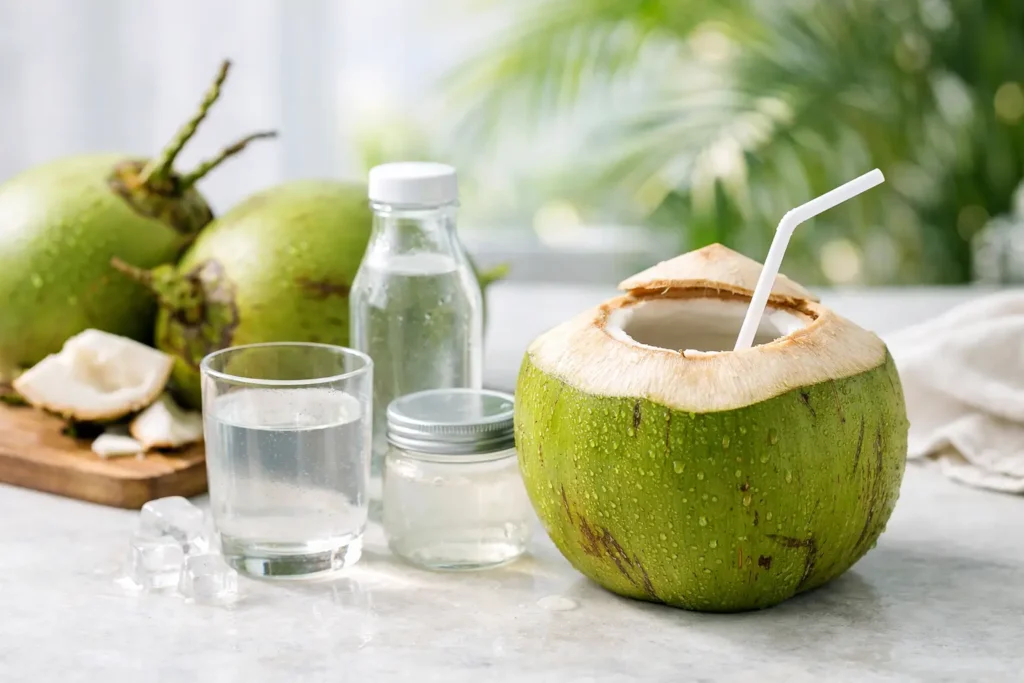
You open a carton or bottle, pour a glass and put the rest back in the fridge. Sounds logical. Yet that’s exactly the moment where things often go wrong when it comes to storing opened coconut water. Coconut water is pure, light in taste and precisely because of that, sensitive once the packaging is open.
That’s not a quality flaw, but rather proof of it. Especially if you choose 100% natural coconut water without added sugars or preservatives, you want to handle storage time, temperature and hygiene smartly. That way the taste stays fresh, the texture stays pleasant, and your hydration stays as pure as intended.
How do you best store opened coconut water?
The short version is simple: always close it immediately, refrigerate right away, and preferably finish it within 2 to 3 days. That keeps you safe for most packaging. Leave opened coconut water out of the fridge too long, and quality declines quickly.
Coconut water isn’t a drink that likes to wait. In unopened packaging it stays stable thanks to how it’s processed and packed. But as soon as oxygen gets in and the packaging is open, taste loss begins. After that, smell and shelf life can change too.
For home use, that mainly means this: only open what you’ll reasonably drink soon. A 330 ml pack is handy if you’re on the go, just finished exercising, or simply want one serving. A litre pack is more practical at home, but requires a bit more discipline after opening.
Why opened coconut water declines faster
Pure coconut water has a fresh, lightly sweet and soft taste. That exact natural profile is what makes it vulnerable. As soon as you open the cap, the drink is exposed to air, temperature fluctuations and possibly bacteria via the glass, rim or cap.
That process happens faster than many people think. Leaving it on the counter briefly during breakfast or after a workout seems harmless, but if it then goes back into the fridge, that shortens shelf life. Especially on hot days or in a busy kitchen.
There’s also a difference between brands and packaging. Coconut water with additives can sometimes be slightly more forgiving. But pure, unsweetened coconut water without preservatives usually requires stricter storage. That fits a product that stays as close to nature as possible.
Storing it in the fridge — how to do it right
The fridge is always the right place for opened coconut water. Ideally store it at a temperature of 4 degrees or lower. Not in the fridge door if you open it often, but rather in a stable spot in the middle of the fridge. The temperature stays more constant there.
Close the packaging properly right after use. That helps not just against air and odour transfer, but also against loss of that fresh, clean taste coconut water is known for. If you have a package that no longer closes well, pour the rest into a clean glass bottle or sealable carafe.
Always use a clean container for that. Quickly pouring it into something that still has traces of juice, smoothie or coffee is asking for off-flavours. Coconut water picks up influences subtly but noticeably.
How long does opened coconut water stay good?
For most opened packages, the rule is: preferably drink it within 2 to 3 days. Sometimes the packaging states specific advice, and that always takes priority. Manufacturers base that on their product, processing and packaging type.
Does that mean coconut water is automatically bad on day four? Not always. But the chance of taste loss does increase. And with a pure product, taste is often your first signal that freshness is declining. It becomes flatter, sourer or slightly yeasty.
If you choose for quality, storing it to the very last moment usually isn’t the best strategy. Coconut water is at its best when it still tastes clear, fresh and lively. You notice that immediately in your glass.
Left out of the fridge for a few hours — throw away or still fine?
There’s nuance here. If opened coconut water has been out of the fridge briefly, for example while pouring or during a meal, and is then immediately chilled again, there’s usually little to worry about. But if it’s been at room temperature for several hours, especially in the heat, the risk becomes greater.
Not sure? Look, smell and carefully taste. But if smell or taste is off, don’t drink it anymore. With natural products without unnecessary additives, being strict is simply smart.
How do you tell coconut water is no longer good?
Trust your senses. Good coconut water smells fresh and tastes light, clean and natural. Not heavy, not sharp, and not fermented.
Signs that opened coconut water is past its prime include a sour smell, a fizzy effect while it shouldn’t be fizzy, a cloudy colour, or a strange aftertaste. If the packaging looks bloated or pressure escapes when opening it while that shouldn’t happen, throwing it away is the safest choice.
Sometimes the change is more subtle. The taste becomes duller or less pure. Then it might not be spoiled yet, but it’s clearly less enjoyable. And let’s be honest: you drink coconut water for pure refreshment, not for a mediocre leftover.
Can you freeze opened coconut water?
Yes, you can. Freezing is handy if you’ve opened a larger package and know you won’t finish the rest in time. Pour it into a freezer-safe container and leave some room, since liquid expands.
The taste generally stays reasonably good, though the experience after thawing can change slightly. Sometimes the mouthfeel becomes a bit less crisp and fresh. For drinking pure from a glass, freshly chilled is almost always tastier. For smoothies, ice cubes or a post-workout blend, frozen coconut water works fine.
Preferably thaw it in the fridge, not on the counter. Here too: once thawed, use it quickly.
Common storage mistakes
The biggest mistake is thinking a cap is enough without immediate refrigeration. Leaving an opened package on the counter, in a gym bag, or in the car shortens shelf life considerably. Especially in summer.
A second mistake is drinking straight from the packaging if you plan to store the rest later. That makes it easier to transfer bacteria into the contents. For a small single serve, that’s less relevant if you finish it right away. For a litre pack, pouring it out is smarter.
Also underestimated: odour influence from the fridge. Don’t place opened coconut water next to strong-smelling products. It remains a subtle drink, and you want to keep that subtle freshness intact.
How do you store opened coconut water if you drink it daily?
If coconut water is part of your routine, for example after exercise, during work, or as a fresh alternative to sweeter drinks, a simple approach helps. Choose the size that fits your moment of use. Small packages are ideal for immediate use. Larger packages work well at home, as long as you finish them quickly.
Always put opened coconut water straight back in the fridge, preferably towards the back where it’s colder and more stable. Use a clean glass and keep the rim of the packaging clean and dry. That sounds minor, but those details make a difference with a pure product.
If you mainly drink it around sport or on the go, it pays to chill what you need for that day in advance and leave the rest sealed. That keeps the taste at its best and prevents waste.
What if the packaging already states how long it keeps?
Always follow that advice first. The packaging usually states clearly how long the product stays good refrigerated after opening. That’s the best guideline, because it’s specific to that composition and processing.
So see general storage tips as a practical baseline, not a replacement for the label. With premium, pure coconut water, that product-specific information is extra relevant. Not every coconut water is exactly the same, even if it looks that way on the shelf.
For anyone consciously choosing natural hydration, that’s actually good news. The fewer unnecessary additives, the more freshness matters. That’s exactly why proper storage isn’t a side issue, but part of the quality in your glass.
The best taste doesn’t come from a half-forgotten package
Coconut water should taste light, clean and refreshing. Not sour, not flat, not questionable. Anyone wondering how to store opened coconut water is therefore looking not just for food safety, but also for the best drinking experience.
That’s why the smartest rule is also the simplest: keep it chilled, close it well, and drink it in time. Pure coconut water rewards good storage immediately — with a fresh taste, natural electrolytes and that clear, tropical feeling you chose it for in the first place. Freshcoco fits perfectly with that: pure, unsweetened and made to be at its best when chilled.
Next time you open a package, think not just about shelf life, but about quality. Because real refreshment doesn’t start at the cap, but in how you handle it afterwards.


