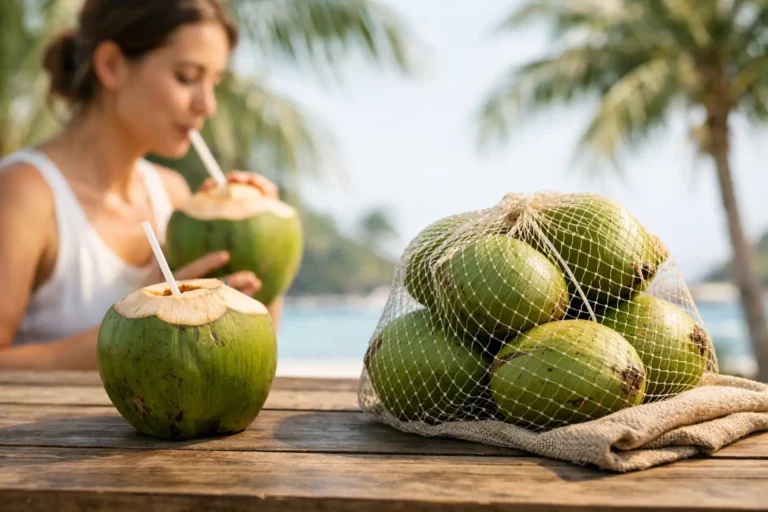


Coconut water without sugar: the refreshing alternative to soft drinks
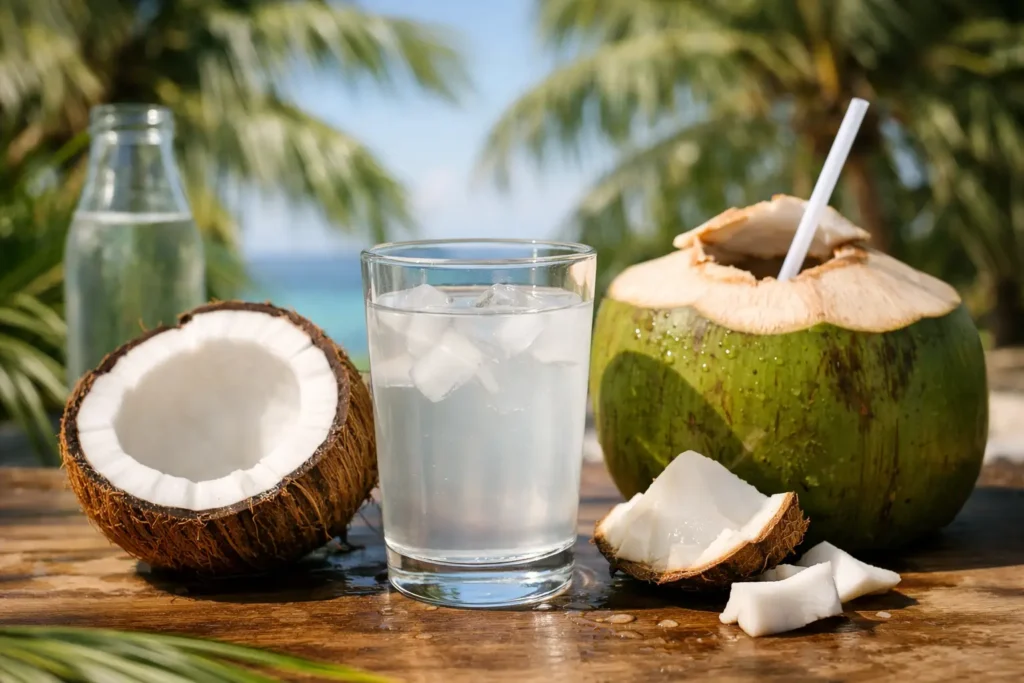
After a workout, between two meetings or simply on a warm afternoon, you quickly reach for something cold. That is exactly where coconut water without sugar is gaining ground. Not because it needs to be a hype, but because more and more people are done with drinks full of syrups, concentrates and unnecessary additives. If you want to drink more consciously, it is not only what is in it that counts, but precisely what has been left out.
Why coconut water without sugar is so appealing
The main reason is simple: you get a drink that is naturally refreshing, without a sweet layer being added on top. Good coconut water already has a light, fresh flavour on its own. Not sticky, not artificial, but subtly sweet the way nature intended.
That makes it interesting for people who want to replace soft drinks, reduce their sugar intake or simply look for a cleaner everyday choice. Especially when you pay attention to labels, you quickly see how a “healthy drink” can still be packed with added sugars. With pure coconut water, that should not be necessary.
There is another factor at play. Coconut water is often chosen for its natural electrolytes, such as potassium. That makes it a good fit for moments when you want to rehydrate after exercise, on the go or during busy working days. It is not a miracle drink, but it is a logical option if you are looking for something between water and a sweet sports drink.
When is coconut water without sugar truly without sugar?
This is where the nuance lies. A package can state “no added sugars” while the product still contains naturally occurring sugars. That is normal for coconut water. Coconut water comes from young coconuts and naturally contains a small amount of natural sugars.
When people search for coconut water without sugar, they usually mean one of two things. Either: without added sugars. Or: as pure as possible, without concentrate, flavourings or other interventions intended to steer the taste. For most people, the first meaning is the most important. You do not want extra sugar in your glass that does not belong there.
It is therefore worth looking beyond the front of the packaging. The ingredient list tells the real story. Ideally, only one ingredient is listed: coconut water. As soon as you see sugar, fruit juice from concentrate, flavourings or preservatives, you are no longer dealing with the purest version.
Taste: less sweet, often actually better
There is sometimes a misconception that unsweetened automatically means less enjoyable. With coconut water, it works differently. Precisely when nothing has been added, you taste the fresh, light character more clearly. The flavour is soft, slightly nutty and naturally sweet, without becoming heavy.
That does not mean every carton or bottle tastes the same. Origin, ripeness of the coconuts and processing all make a difference. Coconut water from Vietnam, for example, can taste slightly different from that from Thailand or Brazil. That is not a drawback, but rather a sign that you are dealing with a natural product rather than a standardised soft drink formula.
Those accustomed to very sweet drinks may need a moment to adjust. Give it a few tries. You will often notice how pleasant it is that a drink refreshes you without leaving a sugar spike behind.
What to look for on the shelf
If you want to make a good choice, there are a few signals that quickly provide clarity. Start with the ingredients. One ingredient is ideal. Then look for claims such as 100% natural, no added sugars and no preservatives. These are not empty phrases if the rest of the label confirms them as well.
Next, look at the nutritional values per 100 ml. Natural sugars may be present, but extreme values do not usually match pure coconut water. If you notice remarkably high sugar values, it is wise to take another careful look at the composition.
Packaging also plays a role. A small bottle works well on the go. At home, after exercise or for the family, a larger format is often more convenient. It is not only about taste and ingredients, but also about routine. A healthy choice only truly works when it fits easily into your day.
Coconut water without sugar and sport
After exertion, the priority is to replenish fluids. Many sports drinks do this with a mix of sugars, colourings and flavourings. For intensive endurance sport, such a formula can sometimes be functional, but for the average gym-goer or runner it is far from always necessary.
Coconut water without sugar is well suited to lighter to moderate exercise and to recovery moments when you are looking for something refreshing. It naturally contains electrolytes and often feels lighter than a classic sports drink. At the same time: the more intensive or longer your training, the more your needs may shift. In those cases, water, food or a targeted sports drink may sometimes be a better fit. It depends on the duration, the heat and your personal needs.
For many people, the strength lies precisely in the simplicity. No chemical aftertaste, no unnecessary sweetness, yet a fresh drinking experience that easily becomes part of your routine.
Is it suitable for everyday use?
For daily use, pure coconut water can be a pleasant variation alongside water, coffee and sweet drinks. Especially at the office, on the go or as a chilled afternoon pick-me-up. It feels just a little more special than plain water, yet remains a conscious choice as long as it is truly pure.
Balance is important, however. Coconut water does not need to replace water entirely. Think of it as a natural extra within a healthy lifestyle. On warm days, after exercise or whenever you simply feel like something fresh without unnecessary additives, it comes into its own.
For families it is also interesting as an alternative to squash or fizzy drinks. Especially if you want to accustom children to less pronounced sweetness. The taste is accessible but not excessive. That makes it a step towards cleaner drinking without becoming boring.
The pitfall of a “healthy image”
Not every product with a coconut label is automatically pure. That is perhaps the most important warning. Some variants lean heavily on a wellness image while having been supplemented with sugar, puree, flavourings or juice concentrate. In that case you are buying more of a lifestyle drink than genuine coconut water.
That is precisely why a critical eye works so well. Ask yourself: am I buying a natural product or a sweet drink with a tropical wrapper? With the best choice, you do not need a lengthy explanation. It is clear, concise and transparent.
This also connects to why more and more people are seeking premium coconut water. Not for a trendy label, but for pure hydration with as little noise as possible. A brand like Freshcoco responds to this logically by placing the emphasis on 100% natural, unsweetened and free from unnecessary additives.
Why pure is often the premium choice
Good coconut water does not need to be dressed up. The quality lies in the source, the selection of young coconuts and the way the product is processed so that flavour and freshness are preserved. You can taste that.
Premium here does not mean complicated or elitist. It means above all that less has been tampered with. No sugar to mask flavour. No artificial additives to polish up a mediocre product. Simply coconut water as it was meant to be.
That sometimes makes the price slightly higher than heavily processed alternatives. But for many conscious consumers, that difference makes sense. You are paying for purity, origin and convenience. And perhaps more importantly: for the confidence that you are drinking what you think you are drinking.
For whom is coconut water without sugar a smart choice?
For athletes it is a fresh option after a training session. For busy professionals it is a handy alternative to energy dips that often end in coffee with something sweet on the side. For conscious families it is a step away from soft drinks. And for everyone who wants to eat and drink more cleanly, it simply fits well into a routine without any fuss.
At the same time, it does not need to become the default drink for everyone. If you do not enjoy the taste, do not force yourself. And if you are mainly used to sweet drinks, the switch may take some getting used to. But that in itself often says something positive. Your palate changes when you become less dependent on added sugars.
For anyone looking for one simple upgrade in their daily drinking habits, this is often a good fit. Not spectacular. But clean, fresh and functional.
The best test remains surprisingly simple: turn the packaging over and read what it actually says. If coconut water without sugar turns out to be genuinely pure coconut water, you have usually found exactly what you were looking for — natural refreshment without any detours.